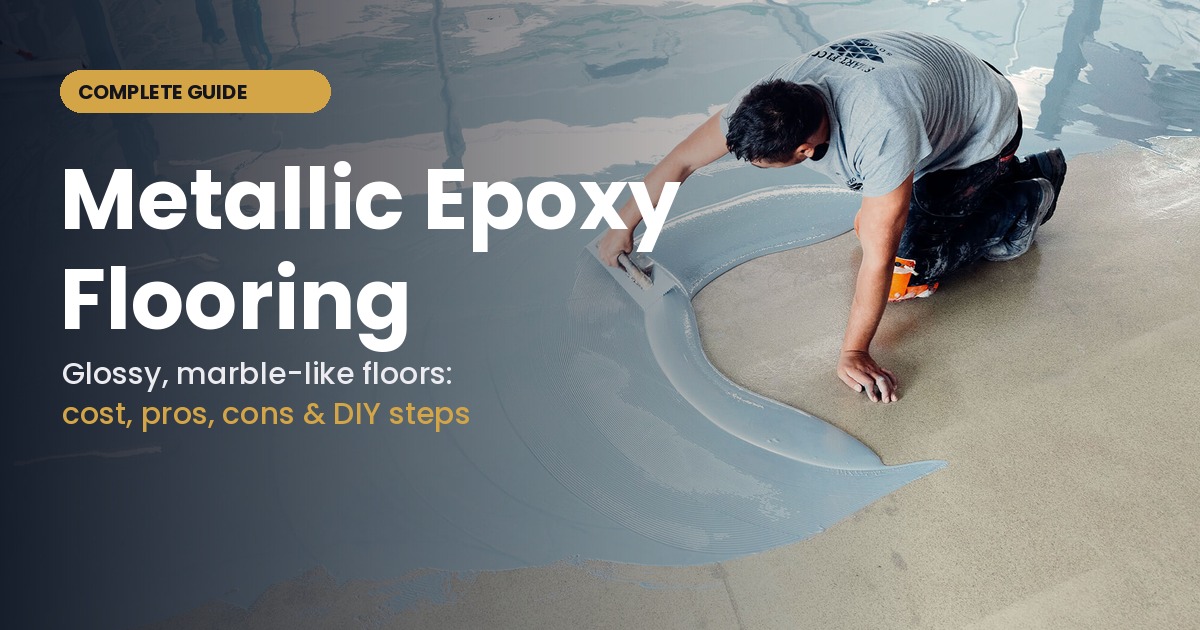
Few home upgrades change a room as dramatically as an epoxy floor. A plain concrete surface becomes a glossy, mirror-like finish with flowing swirls of colour that look like polished marble or liquid stone. Whether you want a modern living room, a stylish hallway, or a durable garage floor, metallic epoxy is worth considering.
This guide covers what epoxy flooring is, its pros and cons, where it works best, and how to install it.
What Is Epoxy Flooring?
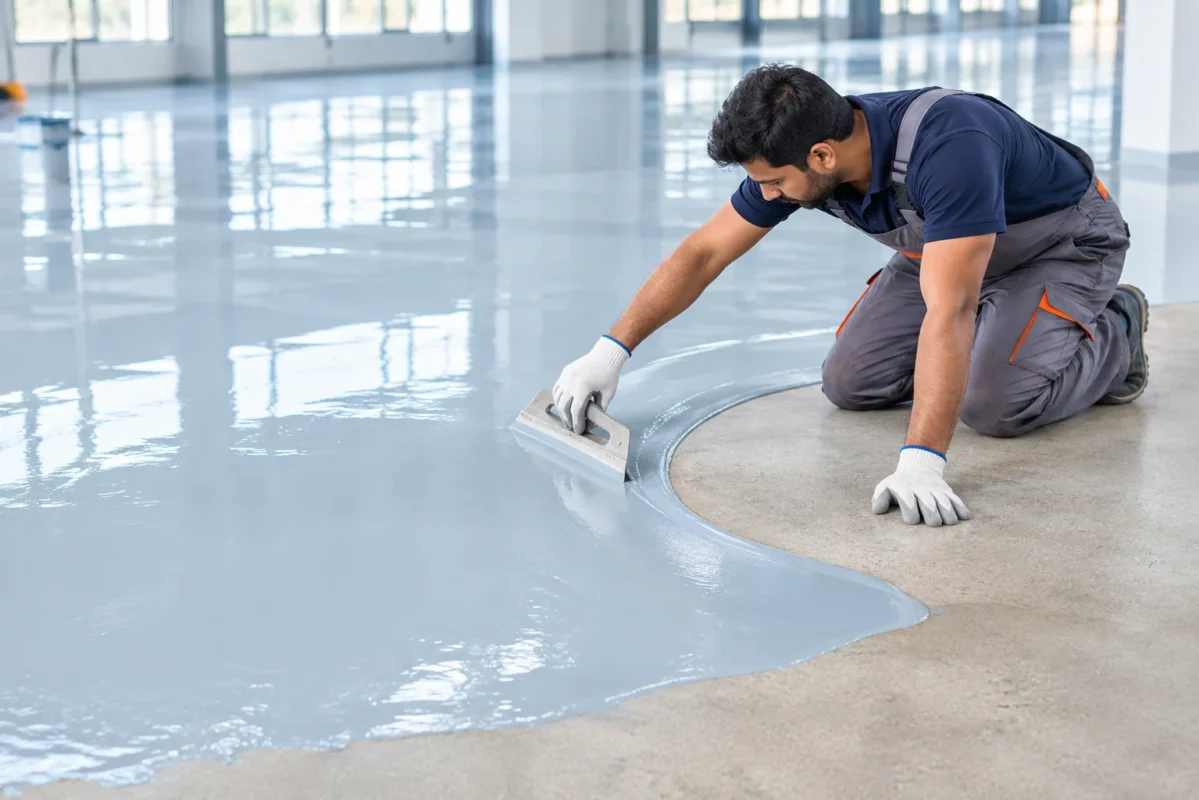
Epoxy flooring is a coating made by mixing two parts, a resin and a hardener. Once mixed, they react chemically and cure into a hard, seamless, plastic-like layer that bonds to the surface underneath, usually concrete.
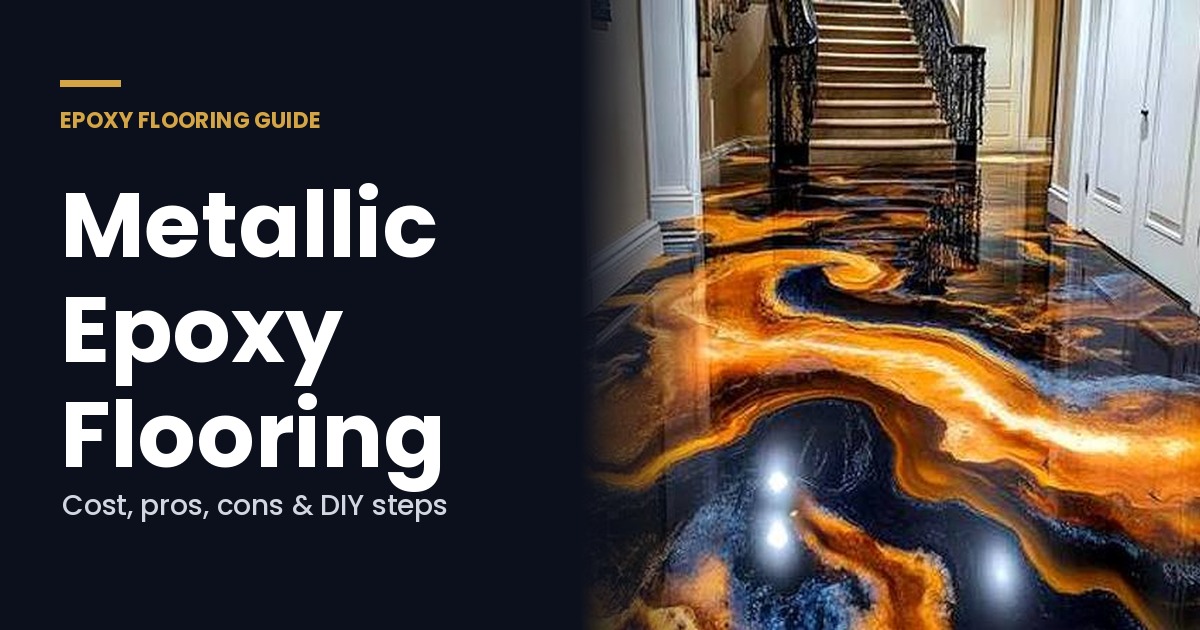
Metallic epoxy adds pigments that reflect light. When poured and moved around, they create the marbled, wave-like patterns you see in the photos here. No two floors look exactly the same.
Popular Metallic Epoxy Colour Styles
- Grey and silver: A calm, modern look that suits living rooms and offices, as in the first photo above.
- Black and gold or copper: A bold, luxurious look often used in entrances, hallways, and showrooms.
- Blue and ocean tones: Wave-like effects that work well in bathrooms or feature spaces.
- White and pearl: A bright, clean finish that makes small rooms feel larger.
Benefits of Epoxy Flooring
- Seamless surface: There are no grout lines or joints for dirt to collect in.
- Durable: It resists scratches, abrasion, and everyday foot traffic when properly installed.
- Easy to clean: Sweeping and mopping with mild cleaner is usually enough.
- Water resistant: It helps protect the concrete below from spills and surface moisture.
- Custom design: You choose the colours and pattern, so the floor suits your style.
- Long lifespan: With proper preparation and care, epoxy floors can last many years.
Things to Consider Before You Start
Epoxy is not perfect, and it helps to know the drawbacks first:
- Surface preparation is essential. The concrete must be clean, dry, and properly ground or etched, or the coating may peel.
- Curing takes time. Most floors need a day or more before light foot traffic and several days before heavy use.
- It can be slippery when wet. Anti-slip additives are available for areas like garages and bathrooms.
- Existing cracks must be repaired first. Epoxy will not hide major structural damage.
- Temperature and humidity matter. Applying in very humid or hot conditions can affect the finish, so check the product’s instructions.
Where Can You Use Epoxy Flooring?
- Living rooms and open-plan homes
- Hallways and staircases
- Kitchens
- Garages and workshops
- Shops, showrooms, and offices
- Balconies and covered patios (use a UV-stable product)
How to Apply Metallic Epoxy: Step by Step
Step 1: Prepare the surface. Remove dust, oil, and old paint. Grind or etch the concrete so the epoxy can grip, then fill any cracks and let the repairs dry.
Step 2: Apply the primer or base coat. Mix the resin and hardener exactly as the manufacturer directs. Spread the base coat evenly with a notched squeegee and roller.
Step 3: Add the metallic pigment. Mix the metallic colour into a fresh batch of epoxy, then pour it onto the floor in ribbons or puddles.
Step 4: Create the pattern. Move the pigment with a brush, roller, or gloved hands to form swirls and waves. Work gently and step back often to judge the effect.
Step 5: Let it cure. Keep dust, pets, and people off the floor for the recommended time.
Step 6: Apply a clear topcoat. A clear protective coat adds depth, gloss, and extra scratch resistance.
How to Maintain Your Epoxy Floor
- Sweep or dust mop regularly to remove grit that can scratch the surface.
- Mop with warm water and a mild, pH-neutral cleaner.
- Avoid harsh chemicals and abrasive scrubbers.
- Wipe up spills promptly.
- Use felt pads under furniture and avoid dragging heavy items.
Where to Buy Epoxy Flooring Materials
If you want to try this yourself, a complete kit saves you from buying each material separately. We recommend [PRODUCT NAME], which includes everything you need to get started.
👉 [Check price and availability here — BUYING LINK]
Frequently Asked Questions
How long does an epoxy floor last?
With proper preparation and care, many epoxy floors last for years. Heavy traffic and sun exposure can shorten that, so a quality topcoat helps.
Can I apply epoxy over old tiles?
It’s possible with the right preparation and primer, but the tiles must be firmly bonded, and grout lines usually need to be filled. Follow the product guidelines.
Is epoxy flooring safe for homes?
Once fully cured, epoxy is generally considered safe for living spaces. During application, wear gloves and a suitable mask, and keep the area well ventilated.
Can I do it myself, or should I hire a professional?
Small areas are manageable as a DIY project if you follow the instructions carefully. For large areas or complex designs, a professional installer is the safer choice.
Final Thoughts
Metallic epoxy turns an ordinary floor into a design feature. With careful surface preparation, the right product, and some patience during application, you can get a durable, easy-to-clean floor that looks custom-made.